



EnTech IT Solutions Blogs
Helpful Blogs Posts to keep you in the know!
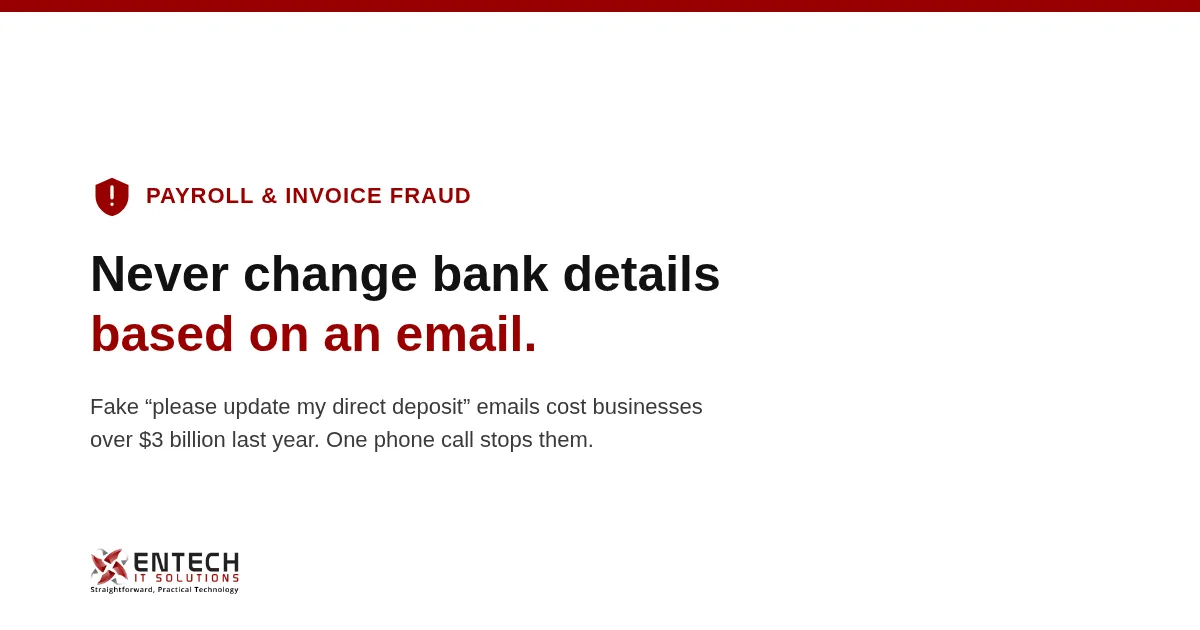
Never Change Bank Details Based on an Email
Never Change Bank Details Based on an Email
It's 4:45 on a Friday. An email lands from one of your employees: "I switched banks. Can you update my direct deposit before payroll runs?" Or it comes from a vendor you pay every month: "We've moved to a new bank. Please send this invoice to the account below." It looks routine. It's the right name, the right tone, sometimes even a real email thread. So someone makes the change. Two weeks later, the real employee asks where their paycheck went, or the real vendor calls about an unpaid invoice. The money is gone.
This is payroll and vendor bank fraud, part of what the FBI calls business email compromise. It isn't rare, and it isn't only a big-company problem. In its latest annual report, the FBI's Internet Crime Complaint Center counted over $3 billion in business email compromise losses in 2025, second only to investment scams. Most of it moved by wire or direct transfer, which is hard to claw back once it clears.
How the scam actually works
- The email often comes from a real account. Attackers steal an employee's or vendor's email password, then sit quietly and read. They learn who pays whom, when payroll runs, and how people write.
- Or it comes from a look-alike address. One letter off, like rn instead of m, is easy to miss on a phone.
- The timing is deliberate. Right before payroll, right before a big invoice is due, late on a Friday. Pressure plus routine equals fewer questions.
- The password theft often starts somewhere ordinary. A calendar invite for a "meeting" that leads to a fake Microsoft sign-in page. A work password saved into a personal browser account. The bank-change email is just the last step.
The rule that stops it: call back on a number you already have
- Never change bank details from an email alone. Not for employees, not for vendors, not for anyone. Call the person on the phone number already in your HR records or vendor file, not the number in the email.
- Require a second person to approve any banking change. One person requests, another verifies. It takes two minutes and removes the single point of failure.
- Put a pause on new accounts. Hold the first payment to a newly changed account for a day, and confirm it again before money moves.
- Protect the email accounts themselves. Multifactor authentication on every mailbox and your payroll portal, plus monitoring for suspicious sign-ins and hidden forwarding rules that attackers set up to read your mail.
- Tell the people who handle money. Your office manager, bookkeeper and HR contact should know this scam by name and know they're allowed to slow down and call.
If it's already happened, speed matters. Call your bank right away and ask them to recall the transfer, then file a report at ic3.gov. The first few hours give you the best chance of getting money back.
The callback rule is free, and it's the most important piece. The technology side is where a managed IT partner earns its keep. Our email security includes setting up SPF, DKIM and DMARC so criminals can't send email pretending to be your domain, and our managed cybersecurity watches Microsoft 365 for the suspicious sign-ins that usually come first.
Would your team catch a fake bank-change email?
If you're not sure, that's worth 15 minutes to find out. Our free assessment looks at how your email is protected, how payments get approved, and where one convincing email could cost you real money. We work with businesses across the Denver metro. No jargon, no pressure.
Not ready for that yet? Get a free copy of SECURED: The Cybersecurity Survival Guide instead.


Connect
Call Or Text:
Email: [email protected]
Address: 2 W Dry Creek Circle Suite 100 Littleton, CO 80120
Let's Start a Conversation today!